Envío gratis a todo Colombia — Devolución garantizada
Everything you need to know about Colombian specialty coffee: technical definition, SCA score, differences from commercial coffee, producing regions and how to identify the real thing.
With over 600,000 coffee-growing families, altitudes exceeding 1,800 masl in regions such as Huila,
Nariño and Antioquia, and a biodiversity no other origin can replicate, Colombian specialty
coffee is not simply a commercial category: it is the result of decades of work, technical
precision and respect for origin.Yet there is still widespread confusion in the market:
- Is it the same as premium coffee?
- Is all Colombian arabica specialty coffee?
- Is it simply a marketing strategy?
The reality is that not every high-end coffee is specialty coffee, and not every Colombian coffee meets
that standard. The difference is not in the price or the label, but in a technically rigorous system of
evaluation, traceability and sensory quality validated internationally.
In this guide you will find a thorough, technical and clear explanation of what Colombian specialty coffee
is, how it is evaluated under Specialty Coffee Association (SCA) standards, and why it makes a real
difference compared to commercial coffee.
At Altora we work exclusively with Colombian specialty coffee microlots with full
traceability: you know the farm, the producer, the altitude, the process and the roast date.
1. Colombia and Specialty Coffee: Why It Is a World Powerhouse
Colombia does not produce the highest volume of coffee in the world — that distinction belongs to Brazil
and Vietnam — but it does produce some of the highest SCA-scoring lots on the planet.
That distinction is not accidental: it is the result of unique geographical conditions and a coffee
culture built over more than 150 years.
What makes Colombian specialty coffee unique?
- Average growing altitude: between 1,200 and 2,100 masl depending on the region
- Two harvests per year in some areas thanks to the equatorial geographic position
- Diversity of microclimates that produce unique sensory profiles by region
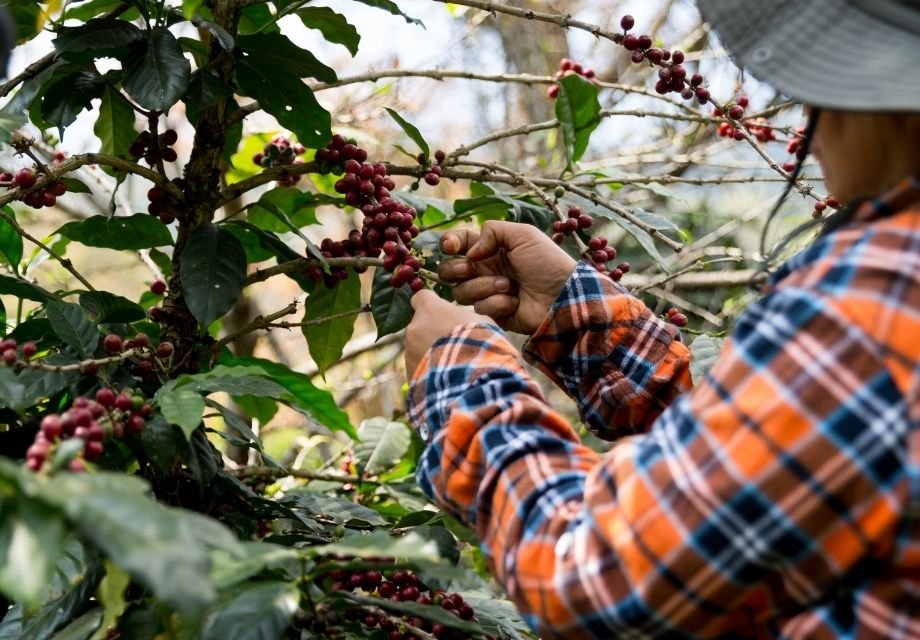
- Tradition of selective hand-picking of cherries at their exact ripeness point
- High concentration of certified Q Graders and active cupping laboratories
Colombia’s specialty coffee regions
| Region | Altitude | Typical sensory profile | Predominant process |
|---|---|---|---|
| Huila | 1,400–1,900 masl | Red fruits, bright acidity, pronounced sweetness | Washed / Honey |
| Nariño | 1,700–2,100 masl | Citrus, floral, delicate body, high acidity | Washed |
| Antioquia | 1,500–1,800 masl | Chocolate, caramel, balance, medium body | Washed / Natural |
| Cauca | 1,700–2,000 masl | Panela, tropical fruits, soft acidity | Washed |
| Santander | 1,200–1,700 masl | Herbal, cacao, earthy notes, full body | Washed / Natural |
| Sierra Nevada | 900–1,800 masl | Yellow fruits, chocolate, soft acidity | Washed |
Each of these regions produces coffee with its own identity. A microlot from Huila does not taste like
one from Nariño, even if both score above 85 SCA points. That diversity of sensory expression is one of
the greatest assets of Colombian specialty coffee.
2. What Is Specialty Coffee? Technical Definition
Specialty coffee is coffee that scores 80 points or more on a scale of
100 according to the Specialty Coffee Association (SCA) protocol, and that presents zero primary defects
and a very limited number of secondary defects in the physical analysis of the green bean.
It is not a marketing category. It is a technical classification based on four pillars:
- Professional sensory evaluation under a standardized protocol
- Physical analysis of the green bean (defects, moisture, density)
- Rigorous control of primary and secondary defects
- Complete traceability: farm, producer, altitude, process and harvest date
Origin of the term and the role of the SCA
The term was first used in 1974 by coffee expert Erna Knutsen, who described coffees
with unique characteristics derived from their microclimate, altitude and post-harvest management.
Decades later, the Specialty Coffee Association formalized these criteria with international cupping
protocols, Q Grader certification through the Coffee Quality Institute, and evaluation standards that
are now the global benchmark.
The SCA scoring scale
| SCA Score | Category | Market classification |
|---|---|---|
| Below 80 points | Not specialty | Commercial or standard coffee |
| 80 – 84.99 points | Very good | Entry into the specialty segment |
| 85 – 89.99 points | Excellent | Premium specialty |
| 90+ points | Exceptional | World top — Cup of Excellence |
Colombia has several producers who have achieved lots scoring above 90 points at international auctions
such as Cup of Excellence Colombia, placing the country among the global elite of
specialty coffee.
3. How Specialty Coffee Is Evaluated: The SCA Protocol
Evaluation is carried out under strictly controlled conditions in a cupping session.
The professional taster — ideally a Q Grader certified by the Coffee Quality
Institute — analyses the coffee according to ten criteria defined by the SCA.
The 10 sensory evaluation criteria
| Criterion | What the taster evaluates | Weight |
|---|---|---|
| Fragrance / Aroma | Intensity and complexity dry and in infusion | High |
| Flavor | Main profile perceived in the mouth during cupping | High |
| Aftertaste | Persistence and cleanliness of flavors after swallowing | Medium |
| Acidity | Quality and type: citric, malic, tartaric, phosphoric | High |
| Body | Tactile sensation: light, creamy, silky, dense | Medium |
| Balance | Harmony between all components | High |
| Uniformity | Consistency across the 5 cups evaluated from the same lot | Medium |
| Clean cup | Absence of sensory defects or negative notes | High |
| Sweetness | Presence of natural sugars without added sweetener | Medium |
| Overall score | The taster’s overall impression of the coffee | High |
Step by step: how a cupping session works
- Medium-coarse grind at a ratio of 8.25 g per 150 ml of water
- Dry fragrance evaluation: aroma of ground coffee before adding water
- Pour water at exactly 93 °C over the ground coffee
- 4-minute rest: formation of the aromatic crust
- Wet aroma evaluation before breaking the crust
- Break the crust with a spoon: evaluation of the released aroma
- Wait until the coffee cools below 71 °C (tasting temperature)
- Taste with a spoon: evaluate flavor, acidity, body, balance and aftertaste
- Record each attribute individually on an SCA form
- Sum and verify the total score
This protocol eliminates subjective variables and allows coffees from different origins to be compared
using uniform criteria. A certified Q Grader in Colombia can cup a microlot from Huila with the same
technical rigor as one from Ethiopia or Guatemala.
4. Commercial Coffee vs Specialty Coffee: A Structural Difference
The difference between commercial coffee and specialty coffee is not only sensory. It is a
structural difference across the entire value chain: from seed to cup.
| Aspect | Commercial Coffee | Colombian Specialty Coffee |
|---|---|---|
| Bean selection | Mass blends from multiple origins | Microlot hand-selected by farm |
| Tolerated defects | High tolerance (up to 86 per 350 g) | Zero primary defects, max. 5 secondary |
| SCA score | Below 80 points | 80 points or more (certified) |
| Traceability | Generally non-existent | Farm, producer, altitude, process and harvest identified |
| Relationship with producer | Multiple intermediaries | Direct trade or close relationship |
| Price to producer | NY commodity exchange price | Premium above commodity — differentiated payment |
| Post-harvest process | Standardized for volume | Controlled according to the desired profile |
| Freshness | Not declared | Visible roast date — 7 to 45 days post-roast |
| Focus | Volume and industrial consistency | Quality, expression of origin and traceability |
Commercial coffee seeks industrial consistency at low cost. Colombian specialty coffee seeks the maximum
expression of terroir: that in every cup you can recognize where it comes from, who grew it
and how it was processed.
5. Factors That Determine the Quality of Colombian Specialty Coffee
Altitude: Colombia’s defining factor
At higher altitude, bean density increases, ripening slows and the concentration of sugars and aromatic
compounds grows. In Colombia, specialty coffee growing zones start at 1,200 masl, and
the highest-scoring lots typically come from altitudes between 1,700 and 2,100 masl — zones where very
few regions in the world can successfully cultivate coffee.
Genetic variety: Colombian diversity
Colombia has a wide diversity of varieties. The most representative in the specialty segment are:
- Caturra and Colombia: the most widely grown, good cup quality, rust-resistant
- Castillo: variety developed by Cenicafé, high productivity with good profile
- Typica and Bourbon: classic profiles, high sensory complexity
- Geisha/Gesha: the most internationally sought-after, pronounced florals
- Tabi: Colombian variety of high sensory quality, present in Huila microlots
- Pink Bourbon: emerging variety with striking tropical fruit profiles
Post-harvest process: washed, natural and honey
| Process | Description | Cup profile |
|---|---|---|
| Washed | Pulp and mucilage removed before drying | Clean, bright, defined acidity, light-medium body |
| Natural (Dry) | Bean dries inside the whole fruit for 2–5 weeks | Full body, intense sweetness, fruity notes |
| Honey | Pulp removed but part of the mucilage retained during drying | Balance of sweetness and acidity, medium-full body |
| Anaerobic | Controlled fermentation in an oxygen-free environment | High complexity, unusual notes, experimental profiles |
Roast: highlighting the origin, not hiding it
In specialty coffee, roasting is a tool in service of the origin, not a way to correct defects. A
roaster working with Colombian microlots seeks the roast level that best expresses the specific
characteristics of the lot:
- Light roast: maximum expression of origin, pronounced acidity, floral and fruity notes
- Medium roast: balance between origin and roast development, sweetness and acidity in equilibrium
- Dark roast: lower varietal expression, chocolate and smoky notes more dominant
Freshness: the forgotten factor
A specialty coffee loses sensory quality over time, even if it was roasted with precision. The optimal
consumption window is between 7 and 45 days post-roast. That is why a visible roast
date is a standard for serious specialty brands — and a red flag when it is missing.
6. The Sensory Profile of Colombian Specialty Coffee
One of the most striking differences in specialty coffee is its aromatic complexity.
A well-scored coffee can present notes of red fruits, dark chocolate, jasmine, caramel, citrus or honey.
These notes are not added flavorings: they are natural aromatic compounds — over 800 have been
identified in coffee — developed through the interaction of genetic variety, altitude, process and roast.
When a technical sheet says “notes of peach and honey,” it describes what a trained taster naturally
perceives in that cup. It is the expression of Colombian terroir in liquid form.
How to start identifying flavors
- Taste without sugar or milk: additions mask the natural profile
- Compare two coffees from different origins or processes in the same session
- Use the SCA flavor wheel as a visual reference
- Practice sensory memory: connect the notes to known fruits and foods
- Read the microlot technical sheet before tasting: context activates perception
7. Why Colombian Specialty Coffee Costs More
The price of a Colombian specialty coffee microlot does not respond to marketing. It reflects a value
chain that is radically different from commercial coffee.
The specialty coffee value chain
- The producer receives a differentiated payment, well above the New York commodity exchange price
- Harvesting is manual and selective: only cherries at their exact ripeness point are picked
- The post-harvest process is controlled, with temperature, humidity and pH measurements
- Each lot undergoes multiple cuppings before being approved for sale
- Lots are small: volume constraints mean a higher cost per unit
- The roaster invests in precise lot-by-lot calibration, not standardized mass roasting
The price reflects: agricultural risk, artisanal work, exhaustive quality control and a fair payment to
the producer that makes this model sustainable.
At Altora we pay significantly above market prices to the Colombian producers we
work with. Fair pay is not a concession: it is the foundation of a sustainable value chain.
8. Common Myths About Colombian Specialty Coffee
Myth 1: “It is just marketing”
False. Specialty coffee is backed by an internationally validated technical evaluation system (SCA),
certified tasters (Q Graders) and reproducible cupping protocols. A coffee’s score can be verified
and replicated in any certified laboratory in the world.
Myth 2: “It is too acidic”
Acidity in specialty coffee is not a defect: it is a positive quality when it is bright and balanced.
Negative acidity — vinegar, failed fermentation — is precisely what SCA protocols penalize. Regions
like Nariño produce coffees with high but elegant acidity, comparable to a well-structured white wine.
Myth 3: “It is not worth the price”
The price of a specialty microlot reflects real quality, manual labor, certified traceability and a
trade model that fairly compensates the producer. Comparing the price of a commodity coffee with a
specialty one is like comparing the price of table grapes with a fine wine.
Myth 4: “It is only for experts”
Not at all. It is for anyone who wants to better understand what they consume. You do not need to be
a Q Grader to appreciate the difference between a coffee with peach notes and a bitter, characterless
one. Sensory education is cumulative and completely accessible.
Myth 5: “All Colombian coffee is specialty”
This is the most dangerous myth for the sector. Colombia produces approximately 14 million bags of
coffee per year, but only a fraction of that production scores above 80 SCA points. Colombian origin
is a privileged starting point, not an automatic guarantee of quality.
9. How to Identify Real Colombian Specialty Coffee
When buying Colombian specialty coffee, these are the elements the label or technical sheet must include:
| Element | What it should say | Red flag if missing |
|---|---|---|
| SCA score | 80+ points (ideally verifiable) | No score listed, or only says “premium” |
| Specific origin | Farm, village or municipality — not just “Colombia” | Only says “100% Colombian” with no further detail |
| Altitude | Meters above sea level of the growing area | No altitude indicated |
| Variety | Caturra, Castillo, Geisha, Pink Bourbon, etc. | Only says “arabica” without specifying variety |
| Process | Washed, natural, honey, anaerobic | No post-harvest process indicated |
| Roast date | Visible on the packaging | No roast date, or only a “best before” date |
| Producer / farm | Name of the producer or farm | Anonymous — no traceability |
At Altora every microlot includes a complete technical sheet: farm, producer,
altitude, variety, process, SCA score and roast date. Coming soon.
Conclusion
Colombian specialty coffee is not a trend or a marketing term. It is the convergence of unique
geographical conditions, rigorous artisanal work, objective technical evaluation and a value chain
that respects all of its actors — starting with the producer.
The difference from commercial coffee is real, measurable and reproducible. It shows up in a score,
in a technical sheet, in a cup that smells of peach or orange blossom without anyone having added
anything. And in Colombia, that difference is built farm by farm, lot by lot, at altitudes where slow
ripening turns every bean into something exceptional.
Choosing Colombian specialty coffee is not just a consumption decision. It is a
decision of knowledge, respect for origin and recognition of the work that makes that cup possible.
Frequently Asked Questions About Colombian Specialty Coffee
What does it mean for a coffee to score 80 SCA points?
A coffee scoring 80 SCA points meets the minimum threshold to be officially classified as
specialty coffee by the Specialty Coffee Association. It means the coffee was evaluated under the
official cupping protocol by a certified taster (Q Grader), has no primary defects, and its
sensory attributes — aroma, flavor, acidity, body, balance and sweetness — exceed the minimum
quality threshold established internationally.
Is all Colombian coffee specialty coffee?
No. Colombia produces approximately 14 million bags of coffee per year, but only a fraction of
that production scores above 80 SCA points. Colombian origin is a privileged starting point — due
to its altitude, biodiversity and coffee tradition — but it is not an automatic guarantee of
quality. Grain selection, controlled processing, cupping and traceability are all required to
reach the specialty standard.
What is the difference between premium coffee and specialty coffee?
“Premium” is a commercial term with no technical standard or objective validation. Any brand
can call itself premium. “Specialty coffee” requires evaluation under the SCA protocol, a minimum
score of 80 points certified by a Q Grader, and verifiable traceability. They are completely
different categories: one is marketing, the other is a technical system.
Is Colombian specialty coffee always highly acidic?
Not necessarily. Acidity depends on the region, variety and process. A natural-process coffee
from Huila can have soft acidity with full body and pronounced sweetness. A washed coffee from
Nariño can have bright, floral acidity. The key is that in specialty coffee, acidity — when
present — is positive, balanced and part of its complexity, not a processing or extraction defect.
How do I know if I am buying real Colombian specialty coffee?
The packaging or technical sheet must include: an SCA score of 80 points or more, a specific
origin (farm or municipality, not just “Colombia”), altitude, variety, post-harvest process and
a visible roast date. If any of these details are unavailable, it is not verifiable specialty
coffee — regardless of what the label says.
What is a specialty coffee microlot?
A microlot is a small batch of coffee — generally between 30 and 500 kilograms — produced by
a single farmer or on a specific plot within a farm, harvested in a given season. Because it is
small and traceable, a microlot allows full control over the process and quality. It is the most
precise expression of Colombian terroir: every cup is unrepeatable.
Why is the roast date important in specialty coffee?
Specialty coffee is at its peak between 7 and 45 days after roasting. Beyond that window,
aromatic compounds degrade and the sensory profile flattens. A visible roast date is a sign of
honesty and professionalism from the roaster. If the packaging only shows a best-before date or
no roast date at all, that is a red flag.